About the National Alliance to Stop Impaired Driving (NASID)
The National Alliance to Stop Impaired Driving (NASID) is a board coalition of stakeholders working in private/public partnership to eliminate all forms of impaired driving, especially multiple substance impaired driving. Established in 2021 and led by Responsibility.org, NASID works collaboratively through effective and proven measures such as DUI system reform, DUI detection, and improved use of data and technology.
NASID members include law enforcement, prosecutors, judges, toxicologists, academics, safety advocates, and industry leaders.
NASID provides national leadership to expand testing among impaired drivers, training for criminal justice practitioners, toxicology lab capacity improvements, and programs to increase likelihood of recovery and reductions in recidivism. Our work includes state and federal advocacy efforts, public awareness and education, and state implementation of effective programs.
Our Members
Our Leadership
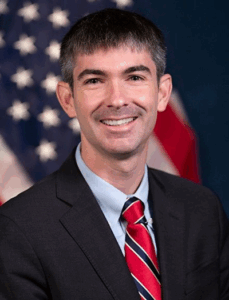
Darrin Grondel
Senior Vice President of Traffic Safety and NASID, Responsibility.org
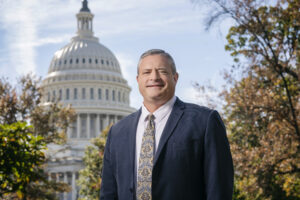 Dr. Grondel’s career began when he joined the Washington State Patrol as a trooper in 1992, where was promoted to sergeant, lieutenant and ultimately captain before retiring in 2017.
During his time as captain, Governor Christine Gregoire appointed Dr. Grondel as director of the Washington Traffic Safety Commission (WTSC) in 2012. He was reappointed by Governor Inslee in 2013.
Under his leadership, the WTSC led the passage of multiple traffic safety laws including impaired driving policies and distracted driving laws that resulted in improved enforcement and effectiveness. Dr. Grondel also directed Washington’s efforts to measure the effect of marijuana legalization on
impaired driving. The data, programs, public education, research and policies he implemented to prevent drug-impaired driving and multi-substance impaired driving have provided a national model to address these emerging issues.
As director of the WTSC, Dr. Grondel served as chair of the Washington Impaired Driving Advisory Council, the Traffic Records Committee, the Tribal Traffic Safety Advisory Board, and the Washington State Autonomous Vehicle Work Group.
At the national level, Dr. Grondel served on the executive committee of the Governors Highway Safety Association (GHSA) Board of Directors, first as secretary and then as its chairman. He also serves on the Drug Evaluation and Classification Technical Advisory Panel, the Highway Safety Committee for the International Association of Chiefs of Police (IACP) and the National Sheriffs’ Association’s Traffic Safety Committee. Dr. Grondel has contributed to numerous national projects related to drug-impaired driving, autonomous vehicles, and national strategic efforts to reduce traffic fatalities to zero.
Dr. Grondel has a doctorate of organizational leadership from Brandman University, a master of public administration from The Evergreen State College and a bachelor of political science from Brigham Young University.
Christiana Falcon
Senior Manager of Traffic Safety and NASID, Responsibility.org
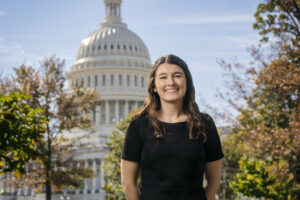
Christiana joined Responsibility.org in 2015 and is currently Senior Manager of Traffic Safety. In this role, she supports the traffic safety team in their mission to end impaired driving. Christiana also manages the National Alliance to Stop Impaired Driving (NASID), a Responsibility.org coalition established to eliminate all forms of impaired driving. A graduate of George Mason University in Fairfax, Virginia, she holds a bachelor’s degree in Public Administration with a concentration in Public Policy and a minor in International Security. She holds a Post Graduate Diploma in International Affairs from King’s College London.
As an undergraduate, Christiana studied abroad at the University of Oxford and interned at the Department of State. Born in Pozzuoli, Italy, to military parents she lived in Europe and Asia. Christiana now lives in Fairfax, VA, with her fiancé and her cavapoo, Uno. In her spare time, she enjoys reading, spending time with friends and family, and exploring the world.
Chris Konschak
Senior Director of Traffic Safety & Gov Relations, Responsibility.org
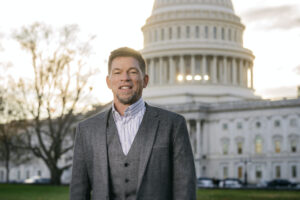 Chris is an impaired driving and traffic safety professional and lawyer with over 30 years of proven experience and leadership success in strategy capacity building, legislative and judicial outreach, media relations, and management of mission driven program initiatives.
Chris began his career as a Congressional Aide with Senator Alan Cranston and transitioned over to the Virginia Federation of Communities for Drug-Free Youth. He also worked within the political and criminal justice system of Virginia in a variety of capacities. Chris has devoted his life and career to serving others and working to prevent drunk and drugged driving.
Most recently he served as Virginia’s Director of Mothers Against Drunk Driving. Under his 17 years of leadership there, he built, maintained, and expanded the relationships Virginia legislators, law enforcement, prosecutors, and a myriad of traffic safety partners. In working with DUI victims and media, his team developed a successful “Victim Stories” campaign utilizing different platforms reaching over 96 million people. A notable accomplishment was his leadership to pass Virginia’s mandatory ignition interlock law for all DUI convictions. This policy change took approximately six years to work through the issues and challenges but speaks to his leadership, character, and perseverance to change policy that saves lives.
Chris has a Juris Doctorate from Howard University School of Law and a Bachelor of Arts in Political Science and Speech Communications from the University of Richmond. He resides in Richmond, VA with his family.
Dr. Ryan C. Smith
Senior Director, Traffic Safety Research and Innovation, Responsibility.org
Dr. Ryan C. Smith is the Senior Director of Traffic Safety Research and Innovation. In this role, he oversees a national traffic safety research agenda for Responsibility.org and the National Alliance to Stop Impaired Driving (NASID). Dr. Smith brings extensive experience from both the public and private sectors and is a national leader in impaired driving data, research, and countermeasures.
Dr. Smith most recently served as a transportation research analyst in the Office of Research and Engineering at the National Transportation Safety Board (NTSB). His primary duties involved conducting safety research studies, supporting major crash investigations, and providing broad technical expertise in the areas of alcohol and other drug impairment. This included advocating for key safety recommendations through media requests, legislative testimony, and stakeholder engagement. He also served as a project manager and senior highway accident investigator in the NTSB’s Office of Highway Safety where he managed high-profile crash investigations and report development. Dr. Smith also completed an interagency detail in the Office of Behavioral Safety Research at the National Highway Traffic Safety Administration.
Prior to joining the NTSB, Dr. Smith was a Research Scientist and founding group leader for impaired driving research at the Virginia Tech Transportation Institute. His duties involved overseeing over $7M in extramurally funded research and leading a diverse team of faculty on projects spanning impaired driving prevention and advanced vehicle technologies.
Dr. Smith brings a national perspective to his work, having led cross-agency efforts to improve impaired driving prevention through research, data analysis, and policy engagement. He is an active member of both national and international working groups focused on impaired-driving prevention, including the Transportation Research Board, International Council on Alcohol, Drugs, and Traffic Safety, and the Association of Transportation Safety Information Professionals. He is a peer reviewer for numerous leading scientific journals and serves on the Editorial Board of The Journal of Safety Research.
He obtained his Ph.D. and Master’s Degree in Industrial and Organization Psychology from Virginia Tech. He also holds Bachelor’s Degrees in Psychology, Sociology, and Political Science – all from Virginia Tech.
Joey Ford
Head of Membership Engagement & Development, Responsibility.org
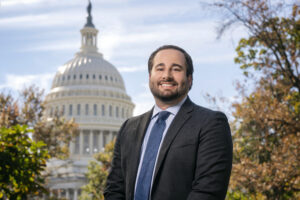 Joey Ford is the Head of Member Relations at Responsibility.org. After graduating from the University of Alabama in 2014 with a degree in Political Science and a minor in Computer Science, Joey moved to Washington, DC where he started his career in Government Relations. His top priorities are to elevate the partner experience and work closely with partner organizations to help reach their goals. Joey has worked in several trade association roles over the years, most notably in the Apparel and Footwear, Data-Driven Marketing, and Manufacturing spaces.
Joey resides in Arlington, VA and in his free time enjoys watching the Alabama Crimson Tide, exploring new cities, and being active by hiking and playing sports.
Contact Us
Want to learn more about NASID and how you can join the fight to end impaired driving? Send us a note below.